
How to Check Eagle Criminal History
Start an Eagle criminal record check by deciding whether the need is for a police report, a booking, or a court outcome. Eagle Police is staffed under an enhanced law-enforcement contract with the Ada County Sheriff’s Office. That means ACSO is the records custodian for an Eagle police event. County and state systems then hold the other parts.
Follow the record from its source:
- Use the ACSO public-record request for the Eagle incident or arrest report.
- Give the event date, Eagle location, report number, and involved names when known.
- Check the Ada County inmate roster or Current Arrests interface for a booking.
- Search iCourt for filed charges, events, and a public disposition.
- Use ISP BCI for an official Idaho repository check, not for the local narrative.
Each result has a different scope. A recent booking can precede a court filing, and a court dismissal does not erase the Sheriff’s original event file.
Eagle Police Contract Shapes Records
Eagle’s enhanced law-enforcement contract with ACSO dates to 1996. Deputies provide locally branded Eagle Police service, yet the county Sheriff remains the operating law-enforcement agency. This is more than an organizational detail. It determines where an Eagle police report is requested and corrected.
The city police office is at 1119 E. State Street, Suite 260, Eagle, Idaho 83616. Its phone is (208) 938-2260. Nonemergency dispatch is (208) 377-6790. Dispatch takes service calls; it is not the same as the records channel. The city’s directory links the requester to ACSO’s form, and ACSO records staff can be reached at (208) 577-3012.
The official Eagle Police source explains the contracted police service.
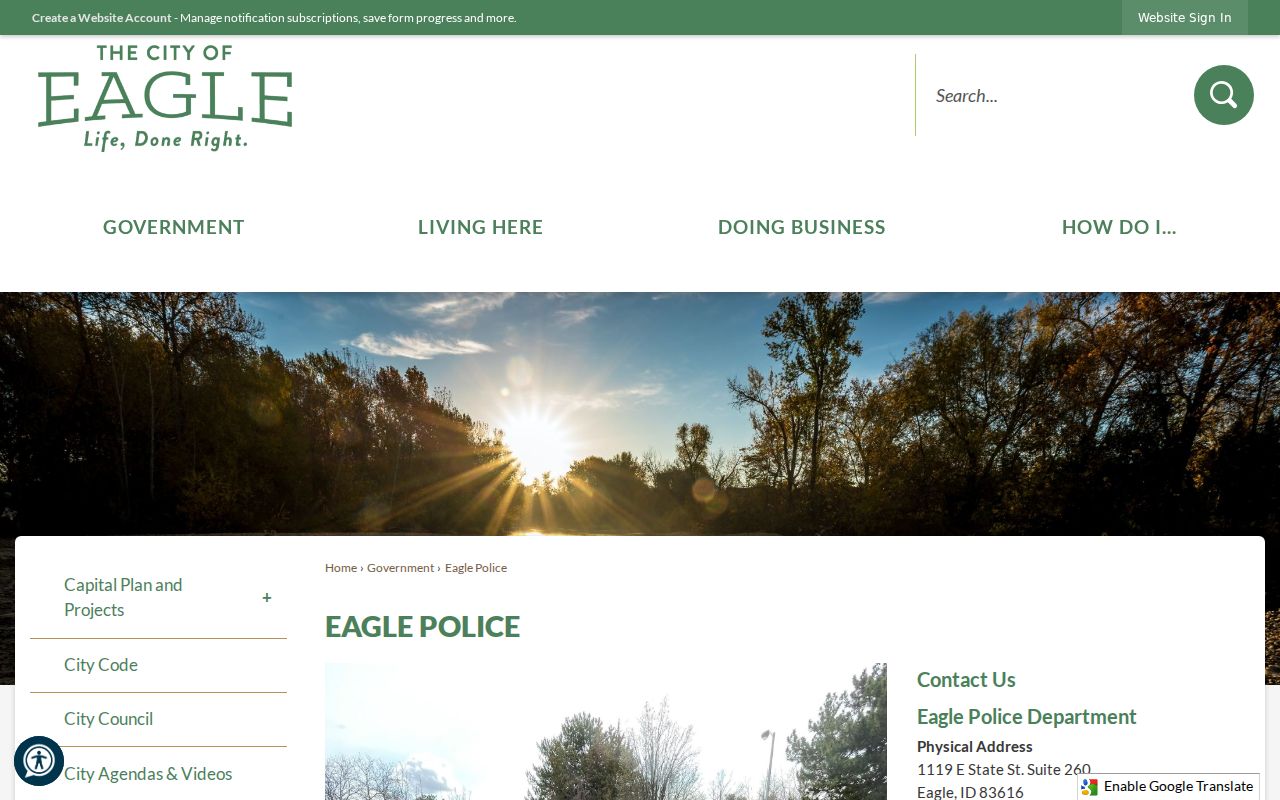
The city presentation identifies Eagle service, while the county contract determines custody of the police record.
The Eagle Police Department
Eagle Police deputies create incident and arrest records for events they handle inside the city. A report can include the call facts, officer narrative, event location, alleged offense, arrest basis, involved property, and witness or victim material. Idaho law may require redaction or withholding of active investigative facts, juvenile records, protected identifiers, and private victim details.
Use the ACSO public-record request rather than sending a report demand to an imagined independent Eagle records bureau. Written requests may also be mailed or brought to the Ada County Sheriff Public Safety Information Center, 7200 Barrister Drive, Boise, Idaho 83704. The documented records phone is (208) 577-3012.
The official Eagle Police directory gives the local office, dispatch information, and county records route.
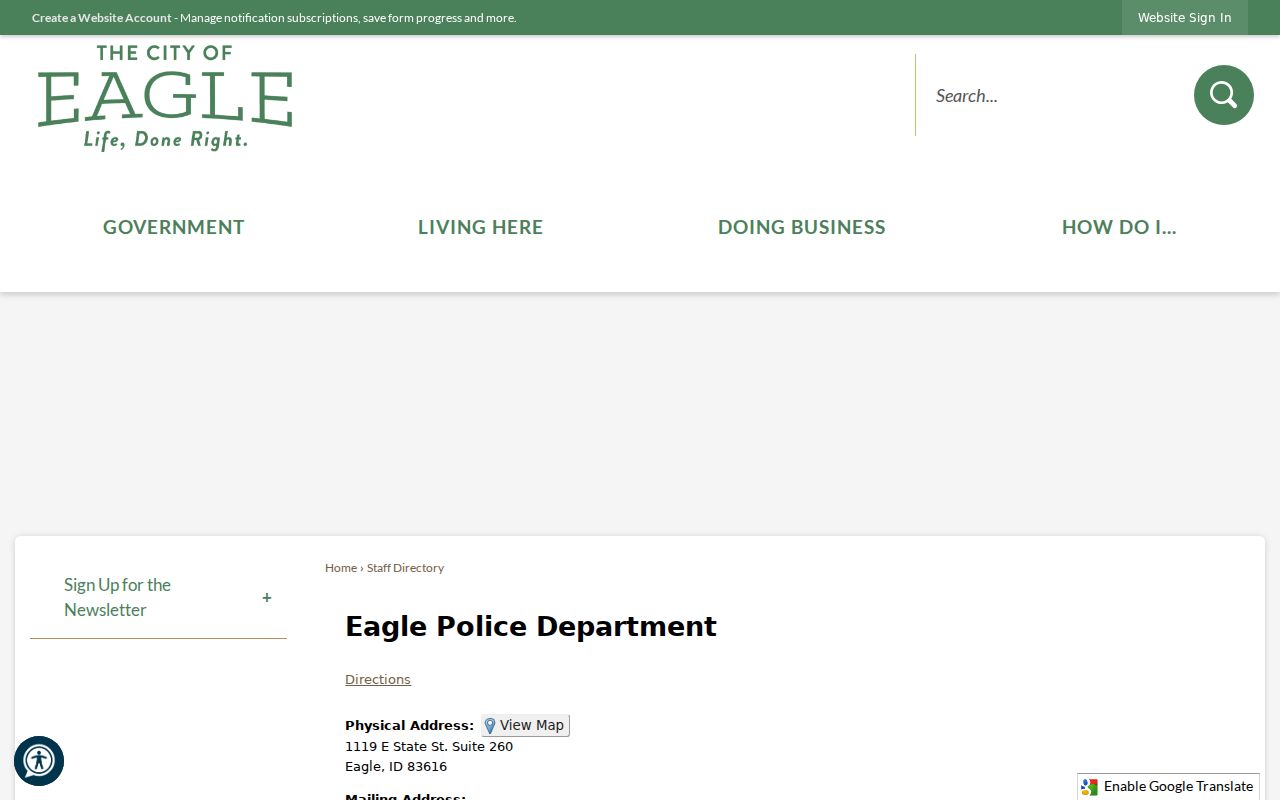
The directory helps distinguish the State Street service office from the Barrister Drive records custodian.
Eagle Reports Route to Barrister
ACSO’s public-record request is the universal fallback for Sheriff-created Eagle incident and arrest material. Describe one event with enough detail to locate it. A report number is best, but the date, time, Eagle address, event type, and involved names can also narrow the search.
Most requests receive a response within three working days. If staff need more time, written notice can extend the response to ten working days. Charges may apply for qualifying copy volume or labor under Idaho law. An exemption can protect part of the file, but the agency may redact protected content and release the rest.
A denial should identify the basis. ACSO’s research also notes a 180-day period to petition district court after denial. Before taking that step, confirm that ACSO actually created or holds the record. A state trooper’s report belongs with ISP, and the court file belongs with the Ada County Clerk.
Arrests and Bookings in Eagle
An Eagle Police arrest generally moves to Ada County Jail. Jail staff create a custody record that is separate from the deputy’s narrative. They record identity, arrival and arrest times, arresting officer, location, charge or warrant, and the next court date when applicable. Fingerprints and a booking photograph are part of the jail process.
The public inmate roster is a daily snapshot. It updates every 24 hours and excludes juveniles. The separate Current Arrests interface offers four-hour, 24-hour, and five-day windows, but neither tool proves guilt. For current custody confirmation, call the jail at (208) 577-3000.
If an Eagle booking is not visible, check the page timestamp, call the jail, and search iCourt for a filing. Then request the Sheriff’s report. This sequence handles the roster lag without turning a stale search result into a claim about someone’s status.
Eagle Crime Records in Context
Eagle’s official 2023 annual report recorded 208 NIBRS Group A person offenses, 228 property offenses, and 315 society offenses. It also reported 259 arrests and a rate of 21.2 reported crimes per 1,000 residents. These are agency-year counts, not a live list of people or cases.
CAD logged 6,358 community-generated calls and 15,581 officer-initiated calls. The report also listed 482 crash calls, 155 DUI calls, 81 mental-health calls, 44 narcotics calls, 303 juvenile calls, and 414 school-security calls. A call does not always yield an arrest or charge.
Trend claims need care. Eagle used geo-validated city limits for 2023, while 2019 through 2022 used reporting districts. The changed geography can shift apparent totals even when underlying activity has not changed by the same amount.
Eagle Municipal Court Records
Eagle does not operate a separate public municipal-court database. City ordinances, traffic matters, misdemeanors, and other assigned proceedings run through Idaho’s Magistrate Division in the Fourth Judicial District. Search the statewide iCourt Portal. If it lists a case but not the needed document, use a courthouse kiosk or request the official file from the Ada County Clerk.
| Court Name | Idaho Fourth Judicial District, Magistrate Division |
|---|---|
| Case Types Heard | Eagle-related misdemeanors, infractions, local matters, and preliminary felony proceedings |
| Case Lookup Channel | iCourt Portal, Ada courthouse kiosk, or Clerk request |
| What the Docket Shows | Case and charge numbers, filings, hearings, status, and public dispositions |
| Copies & Fees | Document access and cost depend on current Idaho court and clerk rules |
The booking charge can change before filing. Read the final disposition for each count rather than assuming one case status resolves every allegation.
Eagle Dispatch Is Not Records
Eagle’s nonemergency dispatch line and its records channel serve different purposes. Call (208) 377-6790 to reach nonemergency dispatch for current service needs. Use the Eagle office at (208) 938-2260 for local police contact. For a copy of a completed Eagle report, route the request to ACSO records at (208) 577-3012 or use the Sheriff’s online form.
This distinction matters after a recent event. Dispatch information may be live and operational, while a releasable report may not yet be complete. Records staff must also review the file for protected material. Calling dispatch repeatedly does not speed that review and does not turn an active incident into a public report.
For a filed criminal matter, the clerk is yet another channel. The courthouse main number is (208) 287-6900. The court, not Eagle dispatch, can confirm the docket and judicial status.
Where Eagle Records End Up
An Eagle event moves through county and state custodians. The contracting deputies create an ACSO report. Ada County Jail creates the booking. Prosecutors and the Ada County Clerk create and maintain the court case. Fingerprint-supported arrest and later disposition data can flow to the Idaho State Police Bureau of Criminal Identification.
Record flow: Eagle Police / ACSO › Ada County Courts › Idaho State Police BCI
Timing produces gaps. The jail roster can be newer than the court docket. A court outcome may not yet appear in a BCI response. An Eagle report can remain at ACSO after a charge is dismissed. For a full picture, compare dates, charge wording, and identifiers across the sources. The broader Ada County criminal court case records resource explains how to read filings and dispositions.
Note: No single Eagle search combines police narrative, jail custody, court outcome, and state repository data.
Eagle Records After a Dismissal
Idaho does not offer one broad adult expungement rule. A person may encounter court sealing under Idaho Court Administrative Rule 32, a set-aside or dismissal under Idaho Code section 19-2604, limited statutory expungement, Clean Slate shielding, or a pardon. Each remedy has different eligibility and effect.
A qualifying section 19-2604 order can alter a judgment, but it does not promise that every ACSO copy or Eagle booking reference disappears. Begin with the court that entered the judgment. Identify the case in iCourt, obtain the docket and judgment, choose the correct remedy, and secure a signed order. Then verify separately with the clerk, ACSO, and a personal BCI record review.
The official Idaho set-aside statute provides the controlling text.
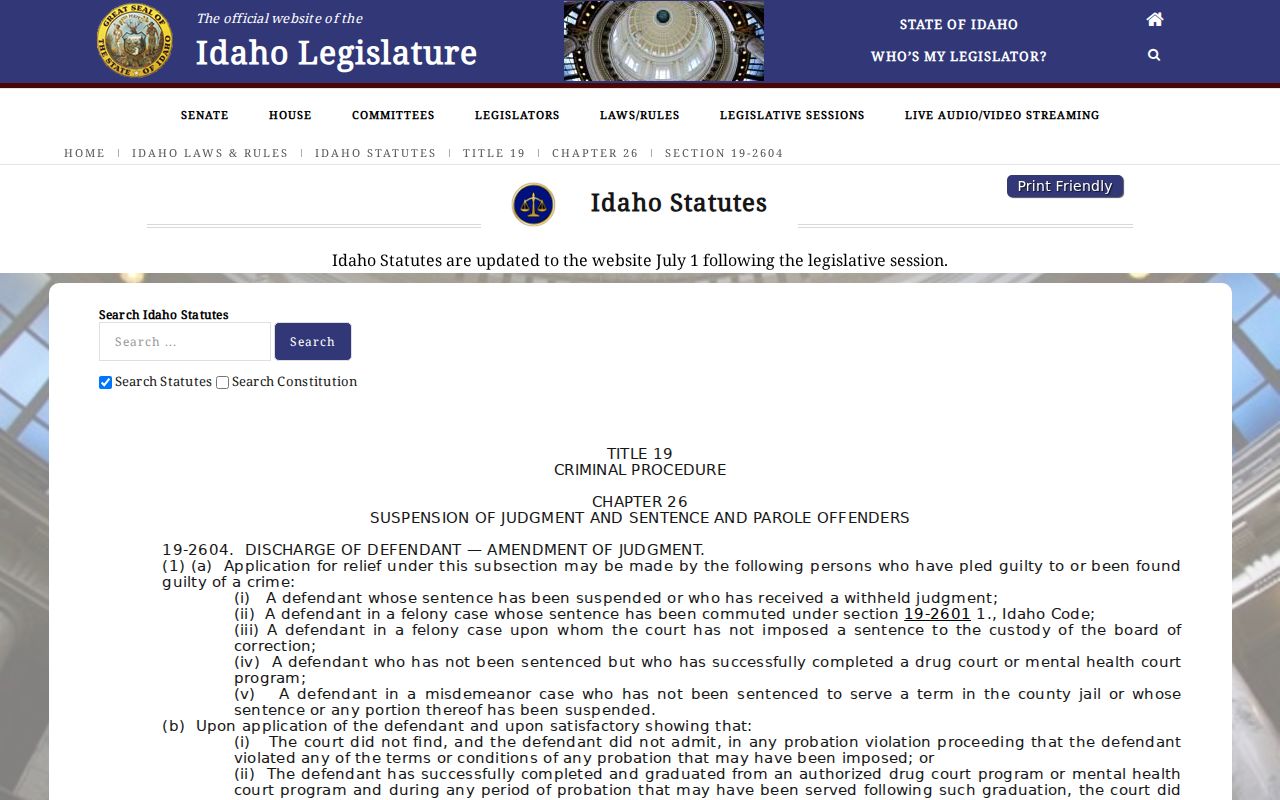
The statute confirms that court relief must be understood by its exact terms, not treated as automatic destruction of all records.
Eagle Reports and BCI Checks
An Eagle police report and an ISP BCI response are not substitutes. ACSO can provide records created through Eagle’s contract policing. BCI supplies an Idaho repository product based on fingerprint-supported arrest submissions. It has no open public name-browse portal.
| Channel | Coverage | Key limit |
|---|---|---|
| ACSO request | One Eagle or Sheriff event | Protected report content may be redacted |
| Ada jail roster | Current county custody snapshot | Daily update and no juveniles |
| iCourt | Public Idaho trial-court case data | Some documents require a clerk request |
| ISP BCI | Submitted Idaho criminal history | Not other states or a full federal search |
A name-based BCI check costs $20 and is less reliable than fingerprint matching. The form may be delivered, faxed, or mailed, but not emailed. BCI does not return results by telephone, fax, or email. Use it for its stated repository purpose, not to replace the report of what occurred in Eagle.
Public Access Rules for Eagle Records
ACSO applies the Idaho Public Records Act to Eagle police records. Idaho Court Administrative Rule 32 governs judicial records. Access can be limited for active investigations, juvenile matters, sealed cases, victim and witness privacy, protected identifiers, and security needs. A custodian may redact those parts while releasing the lawful remainder.
Key Statutes:
Idaho Code § 74-102 provides the public right to inspect and copy records subject to law.
Idaho Code § 74-103 sets response timing and written notice for added time.
Idaho Code § 74-105 covers specified law-enforcement and investigative exemptions.
Idaho Court Administrative Rule 32 controls judicial-record access and sealing.
Public does not mean unrestricted. Idaho law generally bars use of public records as a mailing or phone list. An arrest also remains an allegation unless a court enters a conviction. Use the Eagle and county channels to understand a record, resolve one’s own matter, or verify an official case, and confirm important facts with the office that created them.